All-optical image processing
Tunable and reconfigurable metasurfaces that perform edge detection and phase contrast in hardware. Includes the first thermally reconfigurable image-processing metasurfaces built with phase-change materials.
Melbourne, Australia
Photonics researcher & engineer·School of Physics, University of Melbourne
I design ultrathin nanostructured surfaces that compute with light — performing optical operations directly in hardware, without bulky components or digital post-processing. My work takes meta-optics out of the lab and into biomedical, environmental and agricultural sensing.
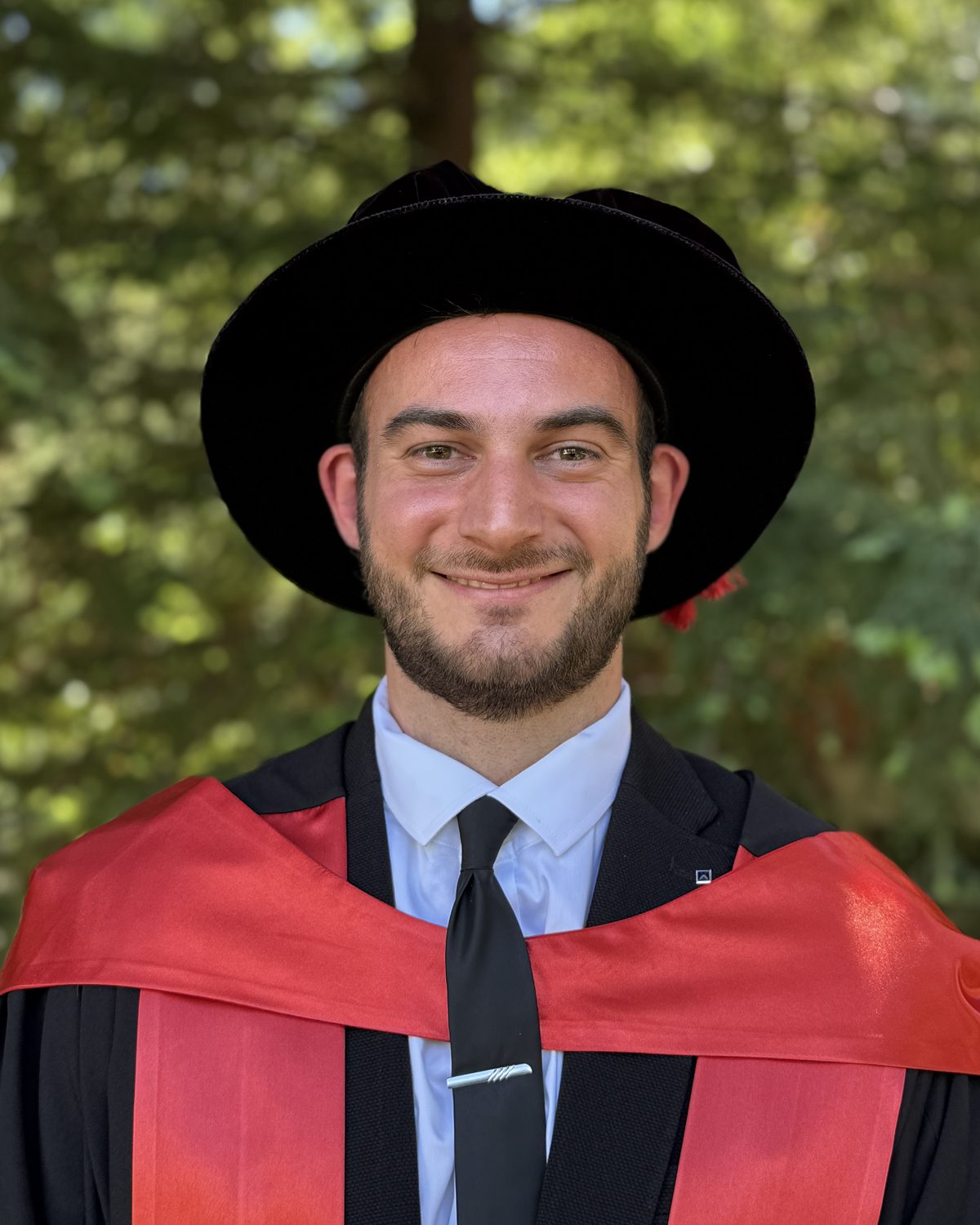
I work at the intersection of nanophotonics and applied optical sensing. My technical foundation is in meta-optics — engineering surfaces thinner than a wavelength of light so that the optics themselves do the computation, rather than the software downstream.
The motivation is access. Microscopes and optical instruments have been indispensable to science for centuries, but their bulk and cost keep them confined to well-equipped laboratories — which means the places that could benefit most from advanced imaging, rural and remote communities among them, are the least likely to have it. Shrinking the optics is how that changes.
The central contribution of my research has been to establish tunable metasurfaces as dynamic optical computing platforms rather than static components — and then to apply them where they solve a real measurement problem: label-free cancer imaging, nanoplastic detection in water, and non-invasive sex determination in poultry hatcheries.
I completed my PhD in Physics at the University of Melbourne within TMOS, the ARC Centre of Excellence for Transformative Meta-Optical Systems, supervised by Professor Ann Roberts. My thesis was nominated for the Chancellor's Prize for Excellence in the PhD Thesis and the Bragg Gold Medal for Excellence in Physics. I've since held a Fulbright placement at the City University of New York with Professor Andrea Alù, and been an invited speaker at Harvard University and the University of Stuttgart.
Four threads, one idea: put the computation in the optics.
Tunable and reconfigurable metasurfaces that perform edge detection and phase contrast in hardware. Includes the first thermally reconfigurable image-processing metasurfaces built with phase-change materials.
Infrared multimodal microscopy platforms that switch between phase contrast and bright field, imaging unstained prostate cancer cells and breast tissue — built with clinical and commercial pathology partners.
An optical sieve for detecting, sizing and counting nanoplastics — the first metasurface platform for the task, surpassing resolution limits of conventional analytical instruments.
Leading optical system development for non-invasive in-ovo sex determination using fluorescence lifetime imaging, in partnership with Australian Eggs — designed against hatchery throughput and cost-per-egg requirements.
School of Physics, University of Melbourne · TMOS
Advanced Science Research Center, City University of New York
School of Physics, University of Melbourne · TMOS
School of Physics, University of Melbourne
Self-employed
Ten refereed journal articles and eight conference proceedings. Full list on ORCID →
First metasurface-based platform for nanoplastic detection and sizing, extending nanophotonics into environmental sensing.
Thermally reconfigurable metasurfaces for all-optical edge detection — ranked among the journal's top 20 Physics publications of 2024.
† Equal first authorship
A selection from more than thirty competitive scholarships, prizes and awards.
Harvard University · University of Stuttgart
University of Melbourne
Thesis: Metasurfaces for tunable all-optical image processing. Supervised by Prof. Ann Roberts, Dr Lukas Wesemann, Prof. Ken Crozier and Prof. Andrey Sukhorukov within TMOS.
University of Melbourne · First class honours
Thesis: Single-pixel ghost imaging with classical correlations and optical metasurfaces.
University of Melbourne · First class honours
I'm always glad to talk about meta-optics, optical sensing, industry collaborations or commercialisation. Email is the best way to reach me.